


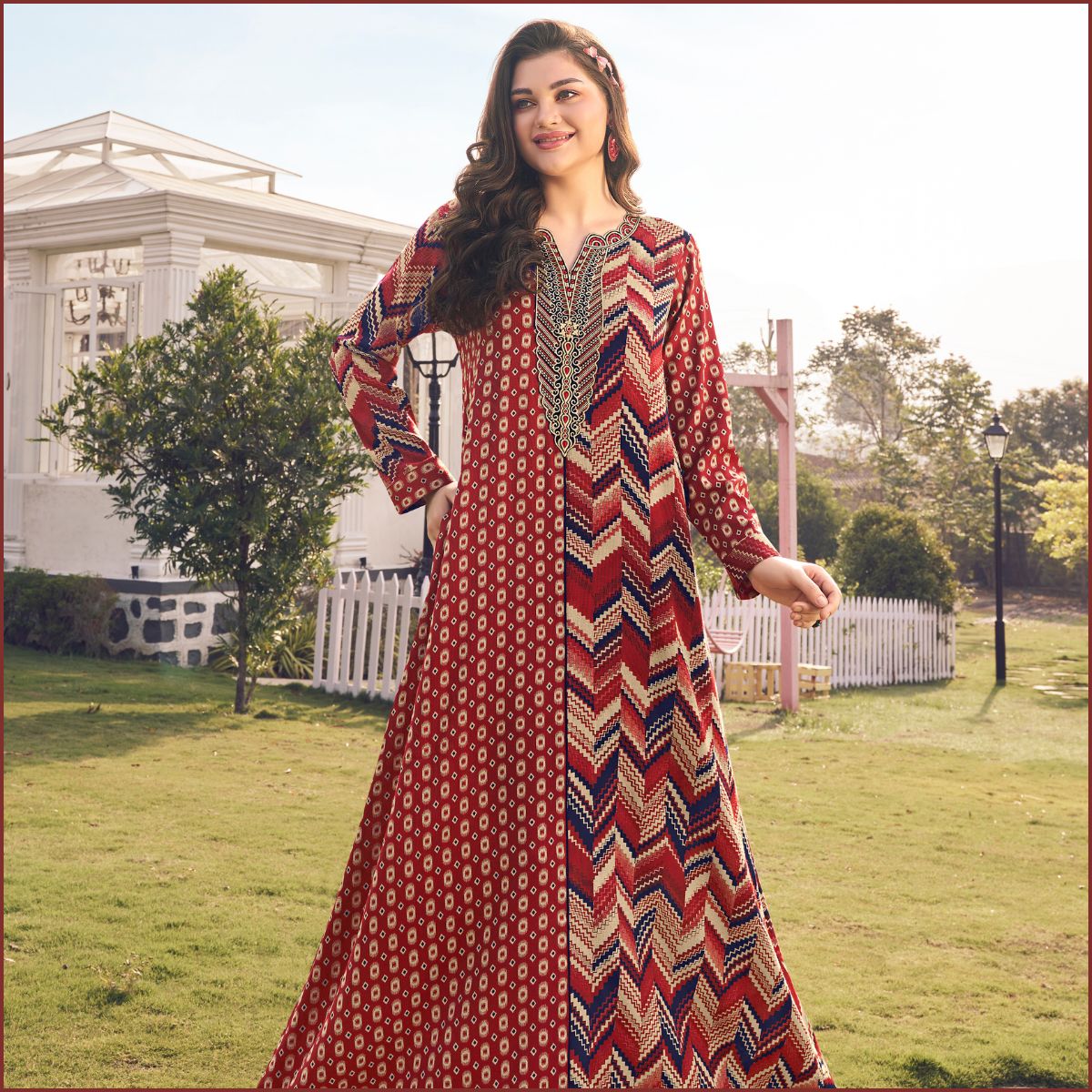
Stand in front of a full rail in a Deira shop, and the hardest choice is rarely the cut. It is the colour. A well-judged shade can make an Emirati jalabiya feel light through a Sharjah July, or quietly formal at an evening gathering, while the wrong one hangs untouched until it gets passed to a cousin. Colour does more work than most of us allow it to. Once you know what to look for, the decision gets far simpler.
Why colour carries meaning in Gulf dressing
Colour has never been decoration alone in this part of the world. Deep maroon, forest green, and gold have long signalled celebration, pulled out for weddings and for Eid. Soft sand tones, cream and dove grey read as everyday and unfussy, the shades a woman reaches for when she is hosting relatives on a Friday afternoon. There is a reason older women in Muscat and Abu Dhabi keep a small rotation of jalabiya colours rather than chasing every new one. They already know which shades suit which moment. When you choose a colour for an Emirati jalabiya, you are also choosing a setting, a season and a mood, whether you mean to or not. That is worth sitting with before the fabric or the embroidery ever enters the conversation. Sara Arabia's rail is arranged with this logic in mind, keeping the festive brights apart from the quieter daily tones so the choice feels less like a guessing game.
Summer shades that stay cool and current
Right now, the calculation is simple. It is hot, and it will stay hot well into September. Light colours reflect the sun and read fresher against the glare, which is why a jalabiya for summer tends to work best at the paler end of the range. Butter yellow, pistachio, powder blue, blush, and every off-white from ivory to oyster. These feel cool even when the weather refuses to cooperate. A pale palette also flatters the lighter, more open weaves that make sense in July, so the colour and the comfort pull in the same direction. If you want a little more depth without the heat, a dusty sage or a muted clay sits nicely between bright and neutral. Keep your deep jewel tones for the cooler evenings later in the year. For a daytime family lunch in the current heat, a soft cotton jalabiya in cream or sage will carry you through far more happily than anything dark. Sara's summer edit leans into exactly this lighter register.
Colours for the evening majlis and family gatherings
Evenings change the maths. Once the sun drops and you are indoors under warm lighting, richer colour earns its place. A festive jalabiya in deep emerald, burgundy, navy or aubergine catches the light in a way pale shades cannot, and it photographs beautifully at the kind of gathering where photographs get taken. Gold and bronze tones sit between everyday and formal, dressy enough for a family dinner without tipping into wedding territory. If the occasion is genuinely grand, black stays hard to beat, especially when it carries fine embroidery or a thread of metallic. One honest caution. A very dark jalabiya can feel heavy in a warm majlis, so if the room runs hot, a lighter jewel tone like teal or a soft plum gives you presence without the weight. Match the intensity of your colour to the intensity of the event and you rarely go wrong. This is the corner of the wardrobe where a woman's own taste really shows.
The neutrals are worth owning
Every wardrobe needs its quiet workers. Neutrals are the jalabiyas you reach for without thinking, and they deserve real attention rather than being an afterthought. Beige, taupe, stone, soft grey and warm white go with almost any accessory and suit almost any daytime occasion, from the school run in Al Ain to coffee with friends in a Muscat mall. A good neutral photographs cleanly, hides little in strong daylight, and pairs with both gold and silver jewellery, which matters more than it sounds. Build two or three of these first, in fabrics you can wear often, and the rest of your colour choices get easier because the base is already there. The trick with neutrals is texture. Since the colour is doing less, the cloth and the finish carry the interest, so a neutral with fine tonal embroidery or a soft sheen never looks plain. Sara keeps a steady range of these everyday tones precisely because they are the ones that get worn the most.
Matching colour to fabric and finish
Colour and cloth are not separate decisions. The same shade behaves very differently across materials, and knowing this saves disappointment. A pale blue in crisp cotton reads casual and cool, while the same blue in silk turns formal and reflective. Deep colours look richer in fabrics with a slight sheen, so an aubergine or emerald gains real depth in satin or a fine crepe. Matte fabrics like linen soften a colour and make even a strong shade feel relaxed, which is handy for daytime. Pale shades in a lightweight, slightly sheer fabric will need proper lining, both for modesty and so the colour reads solid rather than washed out. When you shop online, this is where the product photographs and the fabric notes do the heavy lifting, so read them properly before you commit. Picture the shade in the exact material you are buying, not the idealised version in your head, and the piece that arrives will match the one you imagined.
FAQs
Q: Which jalabiya colours are best for summer?
Pale, light-reflecting shades work best in the heat. Butter yellow, pistachio, powder blue, blush, and off-whites stay cool and current through the Gulf summer, especially in breathable fabrics.
Q: Are bright or bold colours acceptable for an Emirati jalabiya?
Yes, particularly for festive and formal settings. Rich jewel tones and gold suit weddings and evening gatherings. For daily wear, softer or neutral shades tend to feel more appropriate.
Q: How many jalabiya colours should I actually own?
Start with two or three neutrals you can wear often, then add one or two festive colours for occasions. That covers most of a real week without a crowded wardrobe.
Q: Does the same colour look different in different fabrics?
It does. A shade reads casual in cotton or linen and more formal in silk or satin. Deep colours gain richness in fabrics with a slight sheen, so weigh the material alongside the colour.
Final thoughts
Colour is the quietest decision in your wardrobe and often the one that decides whether a jalabiya gets worn or forgotten. Learn your undertone, keep your neutrals close, and let the season and the occasion steer the brighter choices. Next time you shop, whether in a Deira showroom or through Sara Arabia's online range, start with the colour and the rest tends to fall into place. Your most worn piece next year is probably a shade you have not tried yet.
 Free Shipping
 Delivery on time
 100% Secure Payment
Copyright © All right reserved Sara Arabia (SARA PLAZA GEN. TRAD. & CONT. CO. WLL.).


Leave a Comment
Please note, comments must be approved before they are published