


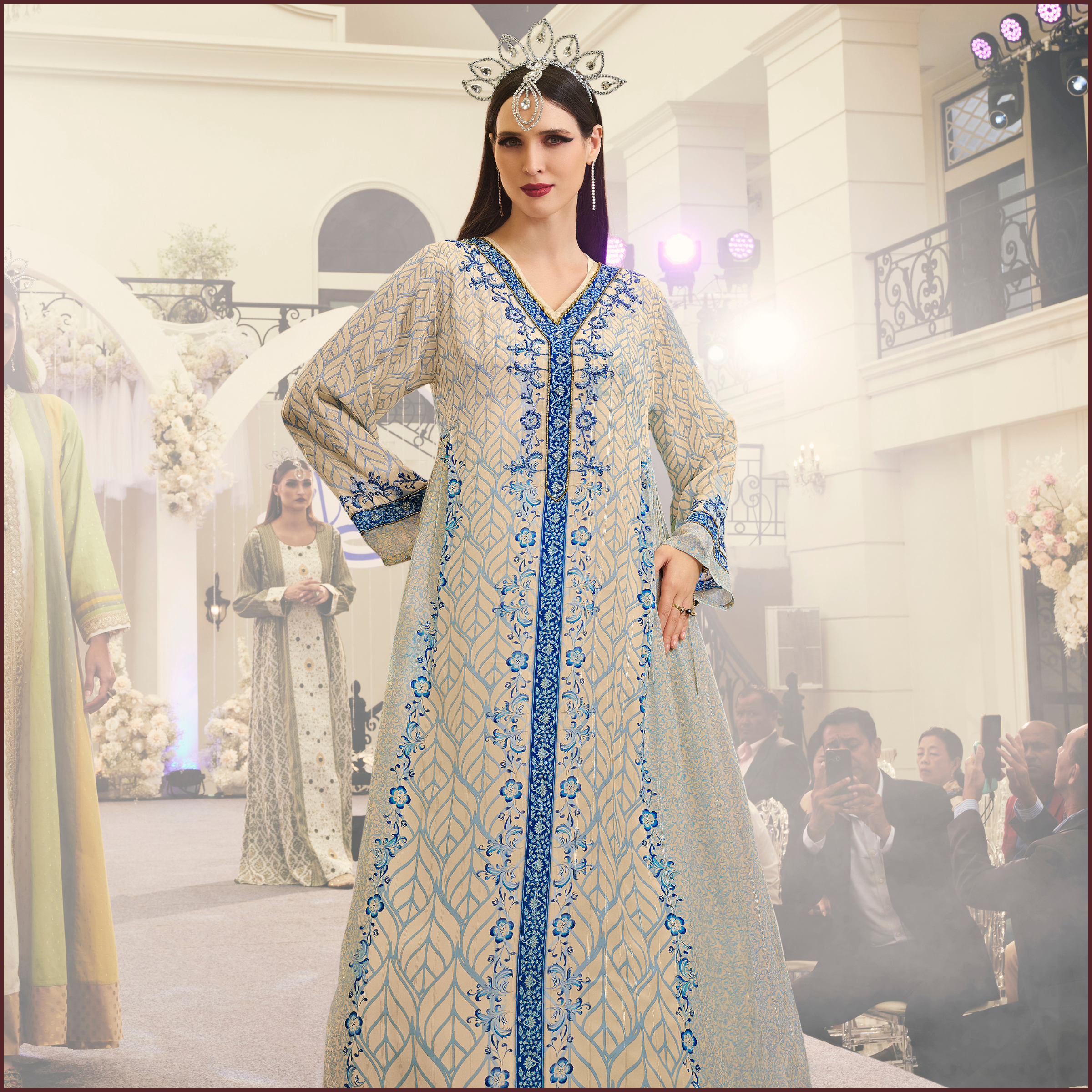
Shopping for an Emirati jalabiya online in UAE summer makes sense until the package arrives and the fabric is wrong. You already knew something was off from the photos, maybe, but bought anyway. Or you didn't know what to look for. Either way, there are concrete things to check before you click purchase, and most of them are visible in product photography if you know where to look.
The fabric description is the first thing to read
A jalabiya isn't a fast-fashion buy. It's something you wear to mark occasions, so the expectations placed on it are different. A brand that understands this tells you specifically what the fabric is: silk-georgette, structured crepe, fine cotton satin. Those are real names. "Soft material" and "comfortable fabric" are not. If a listing avoids naming the actual composition, that's worth a question before you order.
For UAE summer specifically, the practical fabrics are silk-georgette blends, fine crepe, and lightweight cotton satin. Georgette catches light with a soft, uneven luminosity. Crepe hangs in clean columns rather than clinging. Cotton satin sits slightly more structured, with a restrained sheen that works for afternoon gatherings. Budget alternatives tend to read as too uniformly shiny, or too stiff to hold a silhouette properly. You can often see this in photographs, if the photographs are honest ones.
What embroidery should look like in product photos
Embroidery on a quality Emirati jalabiya has depth. The threads sit raised above the fabric surface, and if you zoom into a close-up photograph, you'll notice slight variation in thread tension across the design. That variation isn't a defect. It's what handwork or specialist-machine stitching looks like.
Printed embellishment looks different. It sits completely flat. At the edges of a motif, you might see the colour bleed slightly into surrounding fabric. The design looks sharp from a distance and loses definition up close. Zoom in before you buy. A brand that uses honest close-up photography is one that isn't hiding anything about how the garment was made.
Why sizing matters more than you think
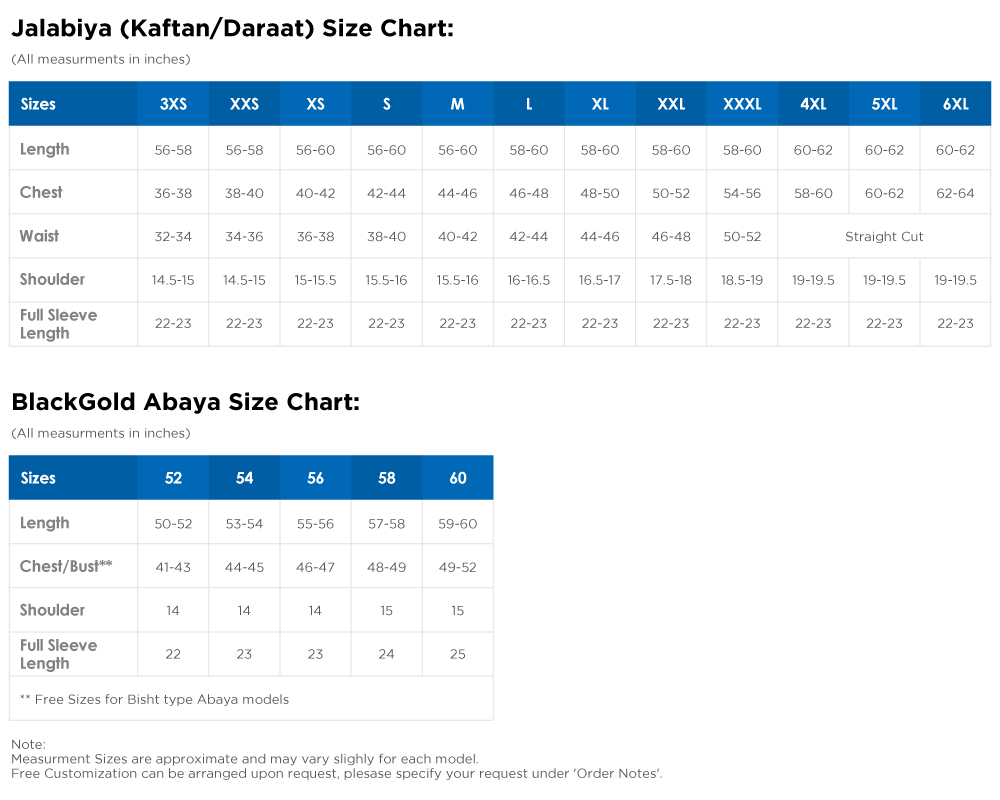
A well-made jalabiya accounts for shoulder placement, chest width, and full length together. When all three are right, the garment doesn't shift when you move. It just sits. When only one measurement is used (often chest width), the result is a jalabiya that technically fits but never looks settled on the wearer.
If a size guide gives you one bust measurement and nothing else, that's information. It means the pattern probably wasn't calibrated at the shoulder or length stage. A size guide that includes garment length and shoulder width per size means those dimensions were actually built into the design, not guessed at during production.
What a physical store presence changes
There are a lot of brands selling Arabic dresses for women in the UAE. Not many of them have stores you can walk into. Sara does, across multiple emirates and in Oman. That changes the stakes for online quality in a specific way: a brand that knows its customers can verify a piece in person has less reason to misrepresent it online.
Sara's summer collections are designed for Gulf conditions, not a generic warm-weather market. The fabrics are chosen for how they behave in the heat - they don't cling, they breathe, they hold their drape over a long evening. That's relevant to the purchasing decision because "lightweight" can mean a lot of things. A fabric chosen for Dubai in July is a different specification from a fabric chosen for a market that considers 25 degrees warm.
When to buy and how to start
June is a good time to shop for a jalabiya online. New season stock is in, and delivery windows across the UAE are short. If you wait until September, you're picking from what's left at the end of the cycle.
Before ordering anywhere: check the returns policy, check delivery time to your emirate or state, and check whether the brand has a store near you. If you're new to buying Arabic dresses online, start with one piece rather than a full order. It lets you confirm sizing before you commit to more. Sara's team is available for sizing questions before purchase, which removes the main risk in online jalabiya buying for first-time customers.
FAQs
What makes a jalabiya luxury versus a regular Arabic lady's dress?
Three things: named premium fabric, visible stitched embroidery with depth and slight tension variation, and fit calibration across multiple measurements. A garment that gets all three right looks settled when worn. It doesn't shift.
How do I check quality when buying a jalabiya online?
Look for close-up embroidery photographs, read for specific fabric composition names, and check whether the size guide includes shoulder and length measurements. A brand that provides all three is showing you evidence. If any of the three is vague or missing, ask before you order.
Can I find a quality jalabiya without going to a mall?
Yes. Sara ships across the UAE, Oman, and worldwide with short delivery windows. If you want to see a piece in person before buying, Sara stores are in multiple emirates. The two channels work together.
Which fabrics work best for Arabic dresses in UAE summer?
Silk-georgette blends, fine crepe, and lightweight cotton satin. They allow air circulation, resist clinging, and maintain their shape through long evenings, including when you're moving between air-conditioned interiors and outdoor spaces.
What should I look for in embroidery?
Embroidery that appears raised in product photos, with slight variation across the design. If embellishment looks completely flat and perfectly uniform at the edges, it's likely printed, not stitched. Good brands show you close-range photography that gives you the thread depth honestly.
 Free Shipping
 Delivery on time
 100% Secure Payment
Copyright © All right reserved Sara Arabia (SARA PLAZA GEN. TRAD. & CONT. CO. WLL.).


Leave a Comment
Please note, comments must be approved before they are published